Top EV Business Ideas in India 2026
India is racing toward electric mobility, and the numbers tell the whole story. Today, the country has roughly 29,000 public EV charging stations. However, India needs close to 1.32 million of them by 2030 to keep pace with EV growth. So that is a gap of more than a million stations in barely five years.
Meanwhile, the ratio sits at about one charger for every 235 EVs, while the global benchmark is one for every 6 to 20. Clearly, demand is running far ahead of supply. On top of that, the government has earmarked ₹2,000 crore for public chargers under the PM E-DRIVE scheme. In short, the timing has rarely looked this good.
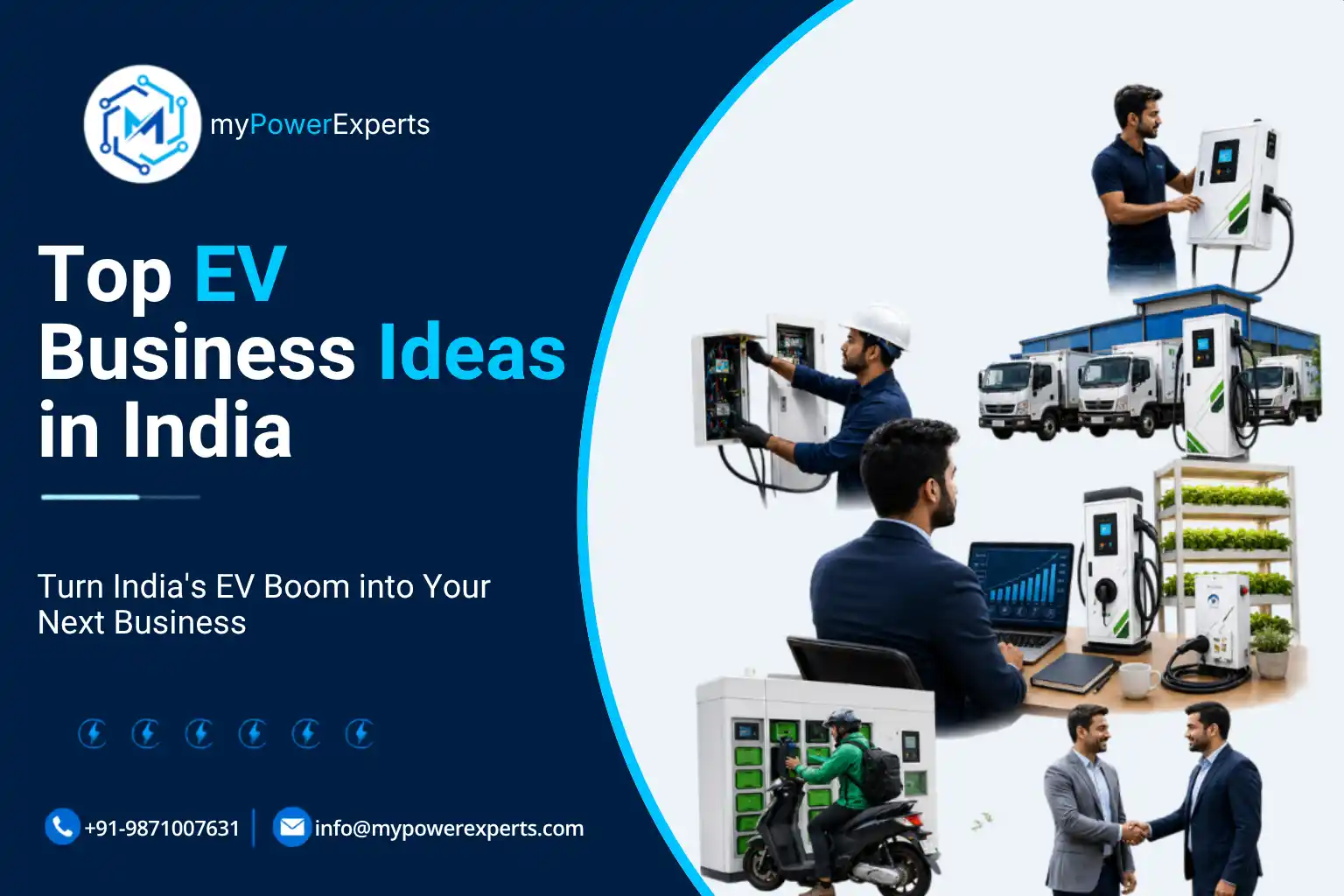
So if you plan to enter this space in 2026, here are the most promising EV business ideas. Notably, we start with the one most guides quietly skip.
1. Launch Your Own EV Charger Brand
Most guides push you toward a franchise, where you pay commission to a large network and follow their rules. However, there is a smarter route. You can build your own EV charger brand instead.
With a white-label EV charger manufacturer, you sell AC and DC chargers under your own name, set your own pricing, and create a real asset. Moreover, you skip the cost of running a factory. As a result, your margins stay with you, not a parent network. Above all, every housing society, office, dealer, and station operator across India becomes a potential buyer. For long-term payoff, this is the strongest play on the list.
2. Public EV Charging Station
Set up AC or DC chargers at a busy site and sell electricity per unit. First, you buy power at a concessional EV tariff of roughly ₹5 to ₹6.50 per kWh. Then you sell it at about ₹12 to ₹18 per kWh. Plus, you need no separate electricity licence. Of course, location decides everything, so target malls, highways, and fleet hubs.
3. EV Charger Installation and Maintenance
Every charger needs proper setup, wiring, and regular upkeep. Therefore, installation and annual maintenance contracts bring steady, recurring income with a low entry cost. If you have an electrical background, this idea fits naturally.
4. Battery Swapping Station
Two-wheelers and delivery riders prefer a quick swap over a long wait. As a result, swapping hubs are spreading fast across dense cities. Here, you stock charged batteries and exchange them in minutes.
5. Fleet and Captive Charging
Logistics firms, cab aggregators, and e-commerce fleets all need dedicated charging. So you can build captive stations for them on contract. Best of all, these deals deliver predictable, high-volume usage.
6. Solar-Integrated Charging
Pair your chargers with rooftop solar, and you cut grid costs sharply. In fact, cities like Bengaluru and Mumbai already favour this model. Plus, lower running costs appeal strongly to green-minded buyers.
7. EV Charger Dealership and Distribution
Not keen on manufacturing yet? Then become a dealer. Here, you distribute chargers to installers and businesses in your region and earn on volume. Naturally, it needs less capital and starts faster than most options above.
Which EV Business Should You Pick?
For quick entry, start a charging station or a dealership. However, for the biggest long-term reward, build your own brand. After all, a single station earns from one location, while a brand earns from every unit sold across the country.
Ready to Build Yours? Start Your EV Charger Brand
You do not need a factory to own an EV charger brand. Instead, myPowerExperts manufactures white-label AC and DC chargers that you sell under your own name, with your own pricing and your own identity. So if 2026 is your year to enter electric mobility, Start Your EV Charger Brand with myPowerExperts today.
Conclusion
The EV charging gap in India is huge, and it keeps widening every month. Therefore, early movers hold a real edge in 2026. You can run a station, install chargers, or distribute them. However, if you want lasting value, owning your brand beats renting someone else’s. So pick your model, start small, and grow with the market.
FAQs
1. How much does it cost to start an EV charging business in India?
A small AC setup can begin at around ₹1.5 lakh, while a DC fast-charging station may run from ₹10 lakh to ₹25 lakh. Costs depend on charger type and location.
2. Is an EV charging business profitable in India in 2026?
Yes, especially at high-traffic sites like highways, malls, and fleet hubs. Most stations recover the investment within two to four years.
3. Do I need a licence to run an EV charging station in India?
No separate electricity licence is required. Still, you must complete the DISCOM connection and basic safety approvals.
4. Is EV charger manufacturing better than a franchise?
Manufacturing lets you own the brand, pricing, and margins. A franchise, however, ties you to one network’s commission, so manufacturing gives you more control.
5. Which EV business needs the lowest investment?
Charger installation, maintenance, and dealership require the least capital. So you can begin with a small team and scale from there.
6. How big is India’s EV charging opportunity by 2030?
India needs about 1.32 million public chargers by 2030, up from roughly 29,000 today. That is nearly a forty-fold gap waiting to be filled.